Civil War Photo of “Unknown Bird” or “Monster”

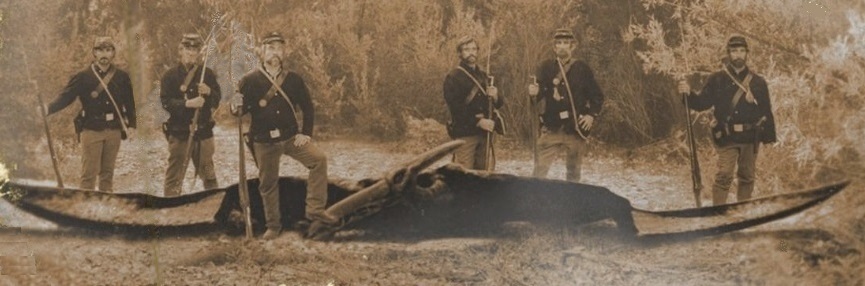
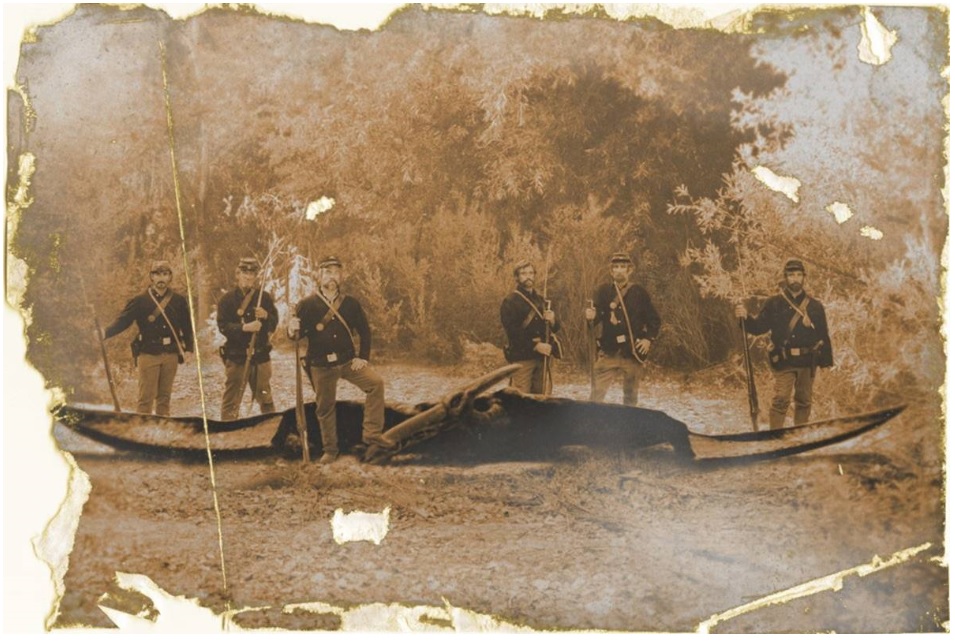
Controversial photograph of six Civil War soldiers next to the apparent body of a recently deceased giant pterodactyl or pterosaur, maybe a Pteranodon

Introduction

I don’t display this version of this photograph as clear and convincing evidence for a giant pterosaur living during the American Civil War. As of 5:00 a.m., April 10, 2013, after spending several days researching and analyzing comments on this photo, and personally examining the photo itself, I rate the probability of its authenticity, in its original portrayal of a modern pterosaur, at only 30%: More than likely those soldiers were not posing for a photograph next to the body of a recently deceased pterosaur, at least close to how it appears here. But comments from skeptics I found unconvincing and worse.

I do submit others’ comments on this photo as clear and convincing evidence for Western bias against the concept of a species of pterosaur living in human times.

Who is Jonathan Whitcomb?

I believe I have written more nonfiction books and blog posts on modern pterosaurs than any other person on earth, which quantity of words proves nothing about my own objectiveness, to be sure; but those who’ve read even a little in those books and blog posts should have no doubt about this: I have spent much time and thought on the subject, more than any other person on earth, as far as I know, and that should count.

Who am I to judge bias against the possibility of modern pterosaurs? I cannot look into the heart of each skeptic who dismisses reports of living “pterodactyls,” but I draw conclusions from the reasoning in many of their comments. I often see similarities in weak arguments for universal extinction and weak arguments in dismissing eyewitness testimony. Consider what has been written about this apparently old photo of six Civil War soldiers and a huge Pteranodon-like winged creature or what looks like that kind of pterosaur.

First Union Civil War soldier on the left in the main photo of six men by a dead Pteranodon-like flying creature

Missing Fingers of Soldier #1

Some skeptics have pointed out missing fingers and opposing thumb on this poor Union soldier (above), the first man on the left in the top photo. It’s unlikely from any injury suffered during the Civil War. Those critics give this detail as if evidence of a hoax. Let’s look a little deeper by comparing his rifle with that of soldier number six:

Union soldier from the far right side of the original photo

Of course this man, soldier #6, has his fingers intact, but look at the rifle. What else is missing from the enlarged image of soldier #1, besides fingers? I’m no Civil War expert, but I see that soldier #6 has his rifle turned in a way that reveals the gun’s ramrod. Soldier #1, on the other hand, has a rifle in which the ramrod is not showing.Why could not soldier #1 be holding onto a ramrod that is turned away from our view? How obvious! But it takes time and thought to discover that kind of detail.

We have a more serious problem with the missing fingers insinuation. Consider hows and whys of photo manipulation regarding soldier #1. If a Photoshop job caused the soldier to have missing fingers, how did that occur? The critic, probably unknowingly, brings up the possibility of a cut and paste hoax operation; that brings up a big problem.

If an adept Photoshop hoaxer made a slight error and cut off that soldier’s fingers, what happened? He would have cut out the original rifle in an old Civil War photo, and then pasted onto the image another rifle. But why would he do such a thing? (And why not just paste an image of a giant Pteranodon onto a photo of Civil War soldiers?) Why bother cutting out and pasting rifles?

Did the original photograph show a soldier without a rifle? Then why was that soldier holding out his arm, as if holding a rifle? The critics who bring up missing fingers completely fail to comprehend both a ramrod ramification and the unbelievable image-origins that their words imply.

With all that said, I myself do not imply that no manipulation was done on the image shown in the top photo, the image with six Union soldiers. I have found details that could be explained through an image-manipulation hoax, both by Photoshop and older techniques. But most of the details that Skeptics bring up as if evidence for a hoax are either worthless or of questionable value.

Bias Against Modern Pterosaurs

Why do so many skeptics simply dismiss this Civil War photo as if it had been proven to have arisen from a hoax? Western people have been indoctrinated, for generations, into universal extinction dogma. It’s drilled into us since early childhood. How difficult it is for us to accept a photograph of an apparent recently-deceased or still living pterosaur!

That severe bias can cause a skeptic to latch onto any little detail in a photo, proclaim it as evidence of a hoax, and then dismiss the whole matter. I don’t suggest anybody simply accept this photo on face value, to satisfy an inward desire that dinosaurs and pterosaurs might still live; I suggest we need to think more clearly, search more deeply, and try to be more open minded to various possibilities.

The sad truth is that if one of my associates or I were to photograph a modern living pterosaur tomorrow, and display the photo to the world, many skeptics would simply dismiss it as a Photoshop job. They would probably give it little attention except to search for something that would justify their previous conclusion about extinction. How we need clear objective thinking!

.

Photograph of Civil War Soldiers and a “Monster”

To begin, I do not present Photo #1 as overwhelming evidence for the existence of a huge modern living pterosaur that has a head suggesting a Pteranodon; I interview eyewitnesses, and some of them report sighting details that have convinced me that huge pterosaurs (rare and nocturnal as they may be) live in this modern world of ours.

Pterosaurs in Georgia

My wife and I were sitting outside when motion from above the tree tops to our left caught my attention . . . We were looking at two extremely large birds flying together . . . 15-20′ wingspans . . . appeared to be featherless.

Pterosaur Sightings and Photos

My associates and I hope that our efforts will someday directly yield photographic evidence and even the capture of one or more of these flying creatures; but for the moment, let’s consider photos that have already been held up as images of possible pterosaurs . . .

Posted in Reasoning, general | Tagged | Leave a comment

New Comment on “Live Pterosaurs in America”

Although the third edition of Live Pterosaurs in America has been available for a year now, the most recent comment on this crypotozoology book is for the second edition:

Some of the words of Lisa Roark

Dear Sir, Thank you for writing such an interesting and well-documented book on pterosaur sightings in America! I literally danced down to the mailbox when it arrived, and hardly put it down until I had finished the last page. . . .

I loved your cautious, yet enthusiastic writing style. Thank you so very much for all your good work. I read parts of it aloud to my family, and they seemed to enjoy it, too. Whereas I would love to encourage others to read your wonderful work, I am not currently allowing my own particular copy of your book to leave my house! It is just too important to lose! May God richly bless you!

From the book itself:

Acknowledgements

In the United States of America—that’s where Scott Norman, in 2007, became the first American cryptozoologist to see a clear form of a living pterosaur while searching for one: a large flying creature with a head three to four feet long. We mourn the passing (from natural causes) of our young friend who is deeply missed in the cryptozoology community.

Introduction

During those years of expeditions in the southwest Pacific, reports in our own country became impossible to ignore; I received many emails from eyewitnesses across the United States, and the reports kept coming in. Pterosaur-like creatures are not all confined to the tropics. As we began to listen to those Americans, we noticed report-similarities: long tails (often) and apparent bioluminescence (sometimes). We began to believe.

Chapter Two – California Sightings

In the summer of 1891, southeast of Fresno, several eyewitnesses reported two featherless flying creatures with wingspans of fifteen feet. Reportedly reputable residents around Reedley described the two “dragons” for the newspaper: broad heads, long bills, and large eyes. “On the night of July 11 . . . their peculiar cries and the rustling of their mammoth wings were heard as late as 10 o’clock.”

Chapter Three – Other U.S. Sightings

. . . it is the eyewitnesses who see apparent living pterosaurs, and many of them, when they first noticed something flying, assumed “a bird.” The point? Eyewitnesses are not biased in favor of living pterosaurs, yet details of appearance caused them to conclude that they had seen pterosaurs: the diamond-shaped end-of-tail, or featherless-creature-with-headcrest. Nobody “wants to see” these pterosaur-features on what is first assumed to be a bird. The explanation? Maybe they really did see living pterosaurs.

.

Live Pterosaurs in America - back cover of book

Back cover of the third edition of Live Pterosaurs in America

###

Another review, this one quite lengthy, comes from a WordPress blog post:

A Whole new Level of Weirdness

. . . it could be that Whitcomb’s writing style (generally readable, occasionally jars, perhaps a cultural thing) without all the usual journalistic fluff  like “Ada was just putting the kettle on as sunshine played across the blinds…” — none of that in Whitcomb’s reports, just his questions asked and the answers rendered verbatim — does not really sell the witnesses. He is definitely sceptical of the testimony he receives, and shows critical thinking about testimony issues, and I must say is an intelligent bloke by the sound of his book. . . .

. . . why do I think Whitcomb’s book is worthwhile and interesting? Because while the individual cases are perhaps weak, he draws a good statistical case that something is going on from his tiny sample. Put simply, the physical traits of the pterosaurs described by the witnesses do not seem to reflect the Hollywood stereotype of the pterodactyl we all know. There are different types of creature which emerge from the data, and the majority have attributes which are surprising.

Cryptozoology Book on Pterosaur Sightings in USA

I couldn’t put this book down. It is absolutely fascinating to read about eyewitness accounts of the people who have seen these creatures. To learn about these testimonies from such an open minded perspective is refreshing in the extreme! . . . Jonathan Whitcomb needs to write more books!

Science and Pterosaur Sightings

Averaging the two types of tail descriptions, the first group is at 36.5% and the second is at 35%, which is practically the same. This strongly suggests that eyewitness do not suffer from any significant memory degradation regarding those two descriptions of the tail.

.

Live Pterosaurs in America -third edition of the nonfiction book - covers

Posted in Excerpts from the book | Leave a comment

Large Flying Creatures in Georgia

Pterosaur Observed in Northern Georgia

David Schroder has allowed me to reveal his real name. He told me, in part:

The first time I didn’t see it. I was laying in bed around 11:30 at night when I heard a loud sound that was kind of like a scream that was so loud and close . . .

Since then I have never thought too much about it until July of 2010. My wife and I were sitting outside when motion from above the tree tops to our left caught my attention . . . We were looking at two extremely large birds flying together . . . 15-20′ wingspans . . . appeared to be featherless. They had a tail of sorts . . .

[The tail] had something on the end that was a little bigger than the tail itself. The body of the birds looked to be a dark gray. They were close when they flew over . . .

.

Pterosaur Observed East of Atlanta

Sandra Paradise has allowed me to reveal her real name. We began email correspondance in 2008. In the mornings she drives east from her home in Winder to where she works in Athens, Georgia. She told me, in part:

. . . you don’t have to go to New Guinea. Far as I can tell, you can sit on a hill outside the town where I live in the mornings and see them. One sighting was at 7 in the morning, and one was at 9 am. Both days were overcast days, which I feel was very conducive to me seeing them . . . no sun in my eyes.

. . . I drive a commute that is roughly 25 miles long thru the woods . . . This 55 mph two-lane road is nothing but pasture, then woods, more pasture, then more woods . . .

On August 27 [2008] . . . I had driven less than ten miles from the house. I had come thru a section of pasture, entering into a section of thick woods, driving around a slight curve downhill . . .

. . . suddenly an animal flew out from my right. Alone in the car I shouted out loud “What the— what—-what IS THAT???” and it flew directly in front of my car, across the road. . . .

To break down the imagery: it was tan, a lighter brown, like the deer we have here, and as far as I could see was uniform in color. . . . the tail was very long with a shape on the end. Its wings were probably half-spread and I saw several dark thin horizontal bands across the belly.

. . . As it crossed my path, in front and slightly above me, I saw it had a head that was curved, like a hammer; the head had a crest on the top that was solid, not feathery at all . . .

Sandra Paradise's rought preliminary sketch of the flying creature seen east of Atlanta, Georgia in 2008

Preliminary head-sketch by the eyewitness Sandra Paradise

.

Flying Creature Sightings in Georgia

Cooler weather does not mean pterosaur sightings come to a halt . . . for they continue.

.

Live Pterosaurs in Georgia

How marvelous that a live pterosaur has been seen in the state of Georgia! But Sandra Paradise has seen a long-tailed flying creature at least three times during the past four years.

.

Live Pterosaurs in America -third edition of the nonfiction book - covers

Third edition, the latest version of Live Pterosaurs in America

From Amazon book reviews of the second edition:

This book has been on my shelf for almost a year now. I pick it up every now and then and a part of me becomes more impressed by the book every time. Yes, the skeptics will laugh at it, but I am a skeptic too. . . .

Some people claim to have seen dinosaurs and pterodactyl like animals today and in the past?? I couldn’t get enough and their are so few books on the subject. I highly recommend this. You may find yourself almost believing in it, although that is not even the authors intent! Whitcomb painstakingly reviews every account for credibility and reason. . . .

Yes, it as a lot to take in. My first thought about these creatures was, “Well, I guess it could be possible because new guinea is very secluded and actually one of the few remaining lost worlds”. Whitcomb will have you suspending disbelief again as he shares his collection of personal accounts from Americans. . . .

. . . this is definitely the book to get . . .  I like how the author is not out to prove every story in the book and takes great care to make sure he has the best ones. . . .  the author tried hard to deliver these stories and was very good at it. This is well written and very hard to put down. [from stevie]

Another reader commented (for second edition):

I couldn’t put this book down. It is absolutely fascinating to read about eyewitness accounts of the people who have seen these creatures. To learn about these testimonies from such an open minded perspective is refreshing in the extreme! . . .

I highly recommend this book to anyone! People should know the truth about what is going on. No one ever hears anything about this unless they conduct extremely specific internet searches, even then, information is minimal. Jonathan Whitcomb needs to write more books! [from StrangeDream]

Posted in Eastern U.S. | Tagged | Leave a comment

American “Dragon Pterodactyl”

Two of the more common words used to describe flying creatures that look like pterosaurs are “dragon” and “pterodactyl,” at least in the United States. But the details in the descriptions, not the labels chosen by eyewitnesses, determine how likely it is that a person has observed a live pterosaur.

The following is taken from the book Live Pterosaurs in America, third edition:

I cannot prove all the accounts were genuine, for they were recorded secondhand in the early 1890’s. I suggest that at least some eyewitnesses were telling the truth, regardless of the opinions of the news reporters of that time, and that at least some eyewitnesses may have seen a living pterosaur.

In the summer of 1891, southeast of Fresno, several eyewitnesses reported two featherless flying creatures with wingspans of fifteen feet . . . two “dragons” [described] for the newspaper: broad heads, long bills, and large eyes.

“On the night of July 11 . . . their peculiar cries and the rustling of their mammoth wings were heard as late as 10 o’clock.” Two nights later, the “monsters” were held responsible for attacking chickens, with “many of the hens being bitten in two and left partly devoured.” On the following week, a carriage of picnickers saw the creatures “plainly circling in the air.”

“Dragons” in Georgia, USA

The first two sightings in the Winder, Georgia, area have been covered in various blogs. We now consider the third sighting (perhaps not yet covered anywhere else).

It was around October of 2008, just weeks after the two better-known sightings near Winder. The eyewitness was again Sandra Paradise; here is part of her account, in her own words:

I was driving the same road, had just passed the point of my  second sighting. Looking ahead and up a hill, I saw a flock of crows  cross the road, from right to left, followed by—yep, you guessed  it. The pterosaur was in perfect silhouette, wings outstretched,  distinctive head in full view, pad on the tail. I drew level to the  place they crossed . . . I slowed down and as I was looking the birds suddenly BURST  from one of the trees! I figured that’s where it had landed, startling  the birds.

I hit the brakes, pulled over hard and sat there with the camera I’d  been carrying with me for months saying, “where ARE you??? WHERE ARE  YOU???”

I waited and looked and stared for probably a good ten  minutes . . . and I had to move on. the place where I was parked was the  far back entry of a very small airport (and yes, I am very sure it  was no plane I saw).

Sandra had to drive on. In that country, snooping around on private property might get you on the wrong side of a gun.

After her second sighting, she told me:

“The world is now totally different. I feel blessed that God has allowed me to see this creature that should not be here, and yet is, this strange dragon-like thing that lives somewhere in the woods in this redneck little town.”

car on a highway near Winder, Georgia - overcast clouds

Highway near Winder, Georgia

.

“Dragon Pterodactyl” Living in California

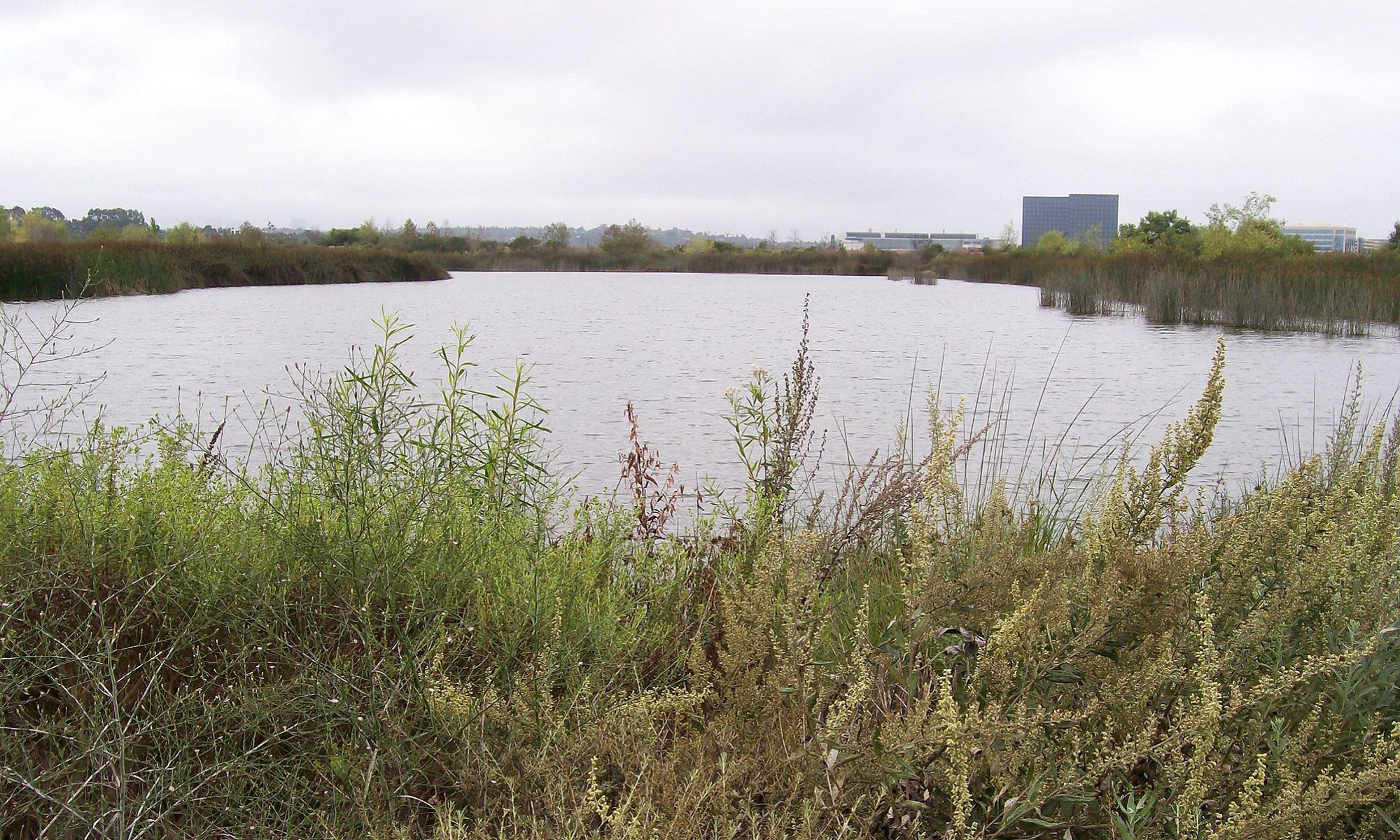
Except for its size, this flying creature resembles the ropen seen flying into the San Joaquin Wildlife Sanctuary in Orange County, California, in 2007.

Pterosaur in Lakewood, California

A lady reported observing a “huge dragon pteradactal” that had been perched, at about noon on June 19, 2012, on a phone line or cable company wire over her backyard

Live Pterosaurs in Georgia

Sandra Paradise has seen a long-tailed flying creature at least three times during the past four years. She has recently agreed to come out of anonymity, and she has revealed details about the third and fourth sightings, with the last one somewhat uncertain.

Posted in California sightings, Eastern U.S. | Leave a comment

Jumping Fishes Fall Short

How is a jumping Manta ray fish like a flying pterodactyl? How desperate is the critic of living pterosaur reports, the skeptic who suggests people are observing large fish that jump up above the surface of the sea!

Imagine you are in a boat in the Caribbean, and a large Manta ray jumps up out of the water. Would you tell people that you had seen a flying pterosaur? No. Neither would I. Nobody, perhaps, would make that kind of mistake and be mentally fit enough to send an email, reporting a ”pterodactyl” encounter, to a cryptozoologist.

But a strange declaration has popped up on two or three blog posts, a suggestion that some sightings come from misidentified Manta rays that leap out of the water and high into the air. The person who suggested that strange idea, however, has failed to follow through: When a Manta ray fish jumps out of the water, it immediately falls back down into the water, and most sightings of flying pterosaurs involve a much longer flight and a much higher altitude than a few feet above water.

In fact, the great majority of sightings of flying pterosaurs have a critical point in common: The pterosaur (or “pterodactyl” or “flying dinosaur”) was not even flying above water, but above land. And those few sightings in which the creature was above the sea or above the ocean—those sightings have critical points that shoot down a jumping-fish speculation.

Sighting From USS Jouett (CG-29)

The USS Jouett (not to be confused with earler U. S. Navy ships with that name) was a Belknap class cruiser, designated “DLG-29″ when it was commissioned in 1966. It was reclassified as a guided missile cruiser, CG-29 in 1975.

Garth Guessman and I spoke with one of the men who was a sailor on this ship when a giant flying creature flew overhead many years ago. One or more of the crew on deck at that time had been watching the approach and called for everyone else to come up and look for themselves. The creature flew over the ship before everybody could get on deck. Even if it were not some species of living pterosaur, the crew called it a “pterodactyl,” and it was definitely not a Manta ray fish that flew over the midsection of that cruiser.

Ship that was overflown by a giant “pterodactyl” intruder

Manta Ray Comes Back to Surface

“Again that poor fish is shot down. We now concentrate on the recent blog post by Dale Drinnon.”

Jumping Manta Ray Fish

“The Four Key Sightings in the Southwest Pacific”

Posted in Reasoning, general | Tagged | Leave a comment

Another Book on Live Pterosaurs

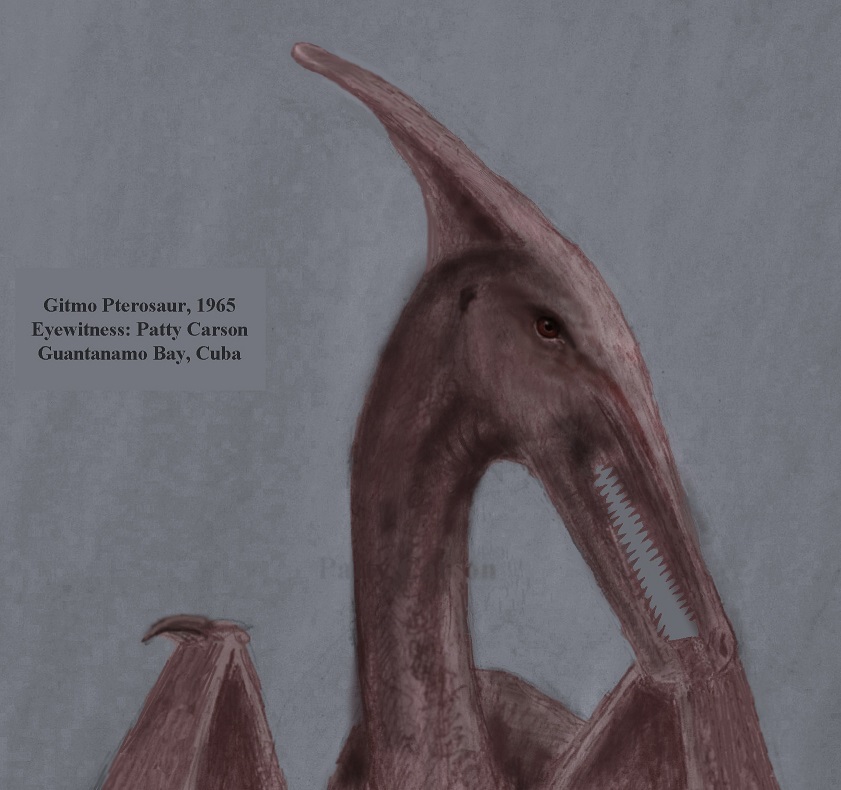
The recently published ebook Live Pterosaurs and Australia and in Papua New Guinea seems to have little connection with sightings on the American continent. But the cover image closely relates, for it has the sketch of the “Gitmo Pterosaur” from Patty Carson’s sighting in 1965 (sighting in North America).

But this new book deals with a similar issue to Live Pterosaurs in America, for Australians have been raised in a similar cultural indoctrination—the assumption of universal extinctions of all species of pterosaurs.

Consider the following quotation from the first chapter of Live Pterosaurs in Australia and in Papua New Guinea:

Darwin emphasized extinctions. In time, the concept of many extinctions in the distant past was accepted by many scientists. That created an atmosphere unfriendly to any eyewitness account of a live pterosaur, to put it mildly. What scientist would have believed it?

The pterosaur-extinction dogma predated Darwin. But if an eyewitness referred to a flying dragon, then “dragon” would have sounded too unscientific. Whatever an eyewitness said, before the twentieth century, any report of anything like a pterosaur would have been rejected by most scientists.

nonfiction cryptozoology book "Live Pterosaurs in Australia and in Papua New Guinea"

Nonfiction Cryptozoology Book on Live Pterosaurs

. . . you have a right to know why some eyewitnesses are hesitant to report shocking encounters. You’ll see an example in the chapter about the 1944 sighting by Duane Hodgkinson and his tight-lipped army buddy.

Non-Fossil Pterosaurs in Australia

Each [of the four critical sightings] rises above the average sighting; each is shocking, with no reasonable misidentification or hoax explanation; each is usually avoided by critics (who prefer ridiculing generalized hypothetical sightings that those critics themselves have imagined). Not one of the eyewitnesses was alone.

Posted in Uncategorized | Leave a comment

Ropens in California

How can living Rhamphorhynchoid (“basal”) pterosaurs fly in California, in modern times? In the United States, we have been taught since early childhood that all such creatures became extinct many millions of years ago. Rather than delve into speculations about fossils, let’s now consider eyewitness testimonies.

Perhaps most pterosaur-like flying creatures in California are of the same species:

  1. a flying creature the “size of a horse” in the Castaic area, in the 1880′s
  2. dragons south of Fresno, in the 1890′s
  3. flying creature: wingspan estimated at 25 feet, in Southern California, in 2004
  4. a huge “pterodactyl-like” animal in Santa Fe Springs, in 2005
  5. a giant ropen near the state university at Irvine, in 2007
  6. large glowing creature flying over San Fernando Valley, in 2009
  7. two giant flying creatures over San Diego, late in 2011
  8. a “dragon” in Lakewood, in 2012.

Most eyewitnesses of apparent pterosaur report a long tail (when they report anything about a tail or lack thereof), and California sightings are no exception. Cryptozoologists who specialize in investigating eyewitness reports of “pterodactys,” generally refer to all modern long-tailed pterosaurs with the name “ropen.”

Ropen Close to Long Beach, California

. . . a 38-year-old woman saw what she at first called a “dragon pteradactal.” The featherless winged creature was sitting on a telephone cable above her backyard, on June 19, 2012 . . .

Pterosaur in Lakewood

. . . when he saw me he jumped off the telephone wires and when he opened his huge wings they sounded like heavy fabric . . . I watched him fly across to a large tree . . .

Pterodactyl in San Diego, California

Two eyewitnesses were shocked, one night last November [2011], by two giant long-tailed creatures that flew over the city of San Diego . . .

Glowing Creature Flying Over San Fernando Valley

It was a very large, winged creature that was gliding maybe 100 yards above us. We stared at the creature in disbelief because it was so strange . . . it didn’t look like a bird . . . my girlfriend has 20-20 vision and she told a few minutes later that it had lights on it. That didn’t strike me as right so I asked her if she was sure and she said they weren’t lights exactly, but that the wings had a glow or reflection. [from the book "Live Pterosaurs in America," third edition]

Posted in California sightings | Leave a comment

Pterosaur in Lakewood, California

A lady reported observing a “huge dragon pteradactal” that had been perched, at about noon on June 19, 2012, on a phone line or cable company wire over her backyard:

. . . . sitting under my [gazebo] playing on my computer in Lakewood, CA. My dog started going crazy barking and whining. I started hearing what sounded like him having really deep burps and I got up after 30 seconds or so because I knew the sounds were not coming from my dog. . . . [I . . . lost my breath] when I saw this huge dragon pteradactal looking thing.

I scared it because when he saw me he jumped off the telephone wires and when he opened his huge wings they sounded like heavy fabric . . . I watched him fly across to a large tree [on the next street over] and go inside [the canopy of that tree].

Where the ropen or pterosaur-like creature was perched:

ropen pterosaur sat on this cable on June 19, 2012

.

The lady drew a sketch of the end of the tail of the creature:

sketch of the end of the tail of the "dragon" seen in Lakewood, California

.

Ropen in Lakewood, California

As the creature unfurled its wings, the lady was surprised by the loud noise, like “heavy fabric.” The long-tailed creature flew off . . . whereupon the lady ran into her house to tell her husband. The two of them then drove around the neighborhood, camera in hand, searching for what the lady later referred to as a ”dragon pteradactal.”

Pterodactyl in San Diego, California

Two eyewitnesses were shocked, one night last November, by two giant long-tailed creatures that flew over the city of San Diego: apparent “pterodactyls.” This was not the first report that I have received from San Diego . . .

Posted in California sightings | 1 Comment